

Message from the CEO
As we close out another demanding and eventful quarter, I would like to take a moment to reflect on the resilience and commitment demonstrated across our wine producers and grape growers during the 2026 wine harvest. With the harvest season concluding in April, we anticipate that approximately 120 WIETA audits will have been successfully undertaken during this period. This is no small achievement, particularly given the operational pressures that accompany harvest, and it speaks to the dedication of producers and cellars to uphold ethical standards even at their busiest time of the year.
This 2026 wine season has once again underscored the very real impact of climate change on our sector. Unpredictable and harsh weather patterns, water pressures, and shifting harvest timelines continue to test the adaptability of producers. At the same time, broader economic pressures, including ongoing fuel price increases and instability linked to geopolitical tensions in the Middle East, are adding further strain to already tight margins.
Locally, we remain engaged with the National Department of Employment and Labour regarding the practical challenges of overtime compliance during peak agricultural periods. While the regulatory framework is essential to protect workers, it is equally important that it reflects the operational realities of agriculture and emergency work. Together with SA Wine, Agri Western Cape, M3 and other stakeholder groups, we continue to advocate for constructive dialogue that balances worker protection with the sustainability of farming and production operations.
Globally, we are witnessing significant shifts in market expectations. Major retailers across Europe are increasingly demanding enhanced transparency, accountability, and demonstrated due diligence within supply chains. While this raises the bar, it also presents a clear opportunity for WIETA participants. The WIETA standard and assurance systems provide a credible, independent mechanism to showcase best practice, build trust with buyers, and position South African wine as a leader in ethical production. To further cement this guarantee, WIETA has successfully completed yet another benchmark verification with the SSCI Team at the Consumer Goods Forum in Paris.
This is not only a reflection of the good governance of the WIETA Board, leadership and diligence of the WIETA staff, but I would like to sincerely acknowledge the hard work, perseverance, and integrity of our producers and cellars. Your ongoing commitment to continuous improvement, often under challenging circumstances, is what gives strength and credibility to the WIETA programme.
As we move into the next quarter, WIETA remains committed to supporting you through robust auditing, practical guidance, and advocacy on the issues that matter most to our sector.
Thank you for your continued partnership and dedication.
Outstanding WIETA Fees for 2025
Urgent – Please note that unpaid WIETA Fees for 2025 will have caused your online profile to be blocked and your membership suspended. This means that members will no longer have a valid audit, audit report or assurance letter to show their buyers, and you will need to start the audit process from scratch.
No access to your completed assurance document? Being blocked or suspended will mean that your site cannot be included in Fair Labour Seal applications.
The invoicing for 2026 has commenced. Please bear in mind that invoices are payable on 30 days to avoid suspension.
Please use your account number as reference and send all proof of payments to info@wieta.org.za.
All Things Assurance
Welcome ACT to the WIETA Social Auditing Community
WIETA is pleased to welcome African Certification and Testing (ACT) to the WIETA Social Auditing community. ACT brings a distinguished track record in social and ethical auditing, strengthened by their status as an APSCA Member Firm and their extensive experience in the agricultural and forestry sectors.
Contact: Jacqueline Acres – ethicaltrade@africancertification.co.za. For any further information, please contact Adrian Bezuidenhout at adrian@wieta.org.za.
Partner Africa Buy-over by LRQA
Partner Africa has been bought over by LRQA. The Audit Body has committed to communicating with its clients around any new requirements. We hope that the transition runs smoothly. If you have any difficulty with your audit booking or assurance queries, please contact Adrian Bezuidenhout at our office on 021 880 580 or at adrian@wieta.org.za.
Important Notice on Waiver Applications on Audits
Please note that waiver applications will only be evaluated if there is a valid audit request on the WIETA Platform and an audit date has been confirmed with the auditing body. Waiver requests must be submitted to adrian@wieta.org.za well in advance of the audit date.
The Use of the WIETA Logo and Fair Labour Certification Seal
The WIETA logo may not be used on any wine product.
Neither can you undertake the use of the Fair Labour Seal without getting your wine approved for traceability. To obtain further information on this, please contact Adrian Bezuidenhout at adrian@wieta.org.za.
Our Programmes This Quarter
Fair and Safe Harvest Campaign
WIETA launched its 2026 Fair and Safe Harvest Campaign from January to April, aligning with the wine industry’s peak harvest period. The initiative supports the well-being of 250 seasonal workers by offering fully funded training on workplace rights, responsibilities, and health and safety practices. The aim is to help workers clearly understand their roles and build respectful,constructive relationships with management.
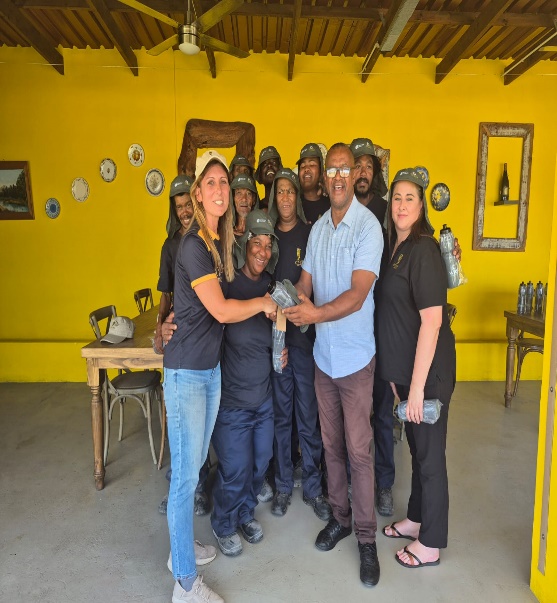
The campaign also focuses on practical protection against harsh summer conditions. Each worker receives a sun hat and water bottle, reinforcing key health and safety measures and highlighting the link between social compliance and environmental sustainability.
In addition, WIETA facilitated training sessions on labour and occupational health & safety rights at the La Motte Packhouse, Rustenhof Boerdery and Ayama Wine Estate. Additional campaign footage included the participation of representatives from SA Wine and the Department of Agriculture. A sincere thanks to all participants for their valued contributions to the campaign.
Black and Emerging Producer Support Programme
De Goree Trust
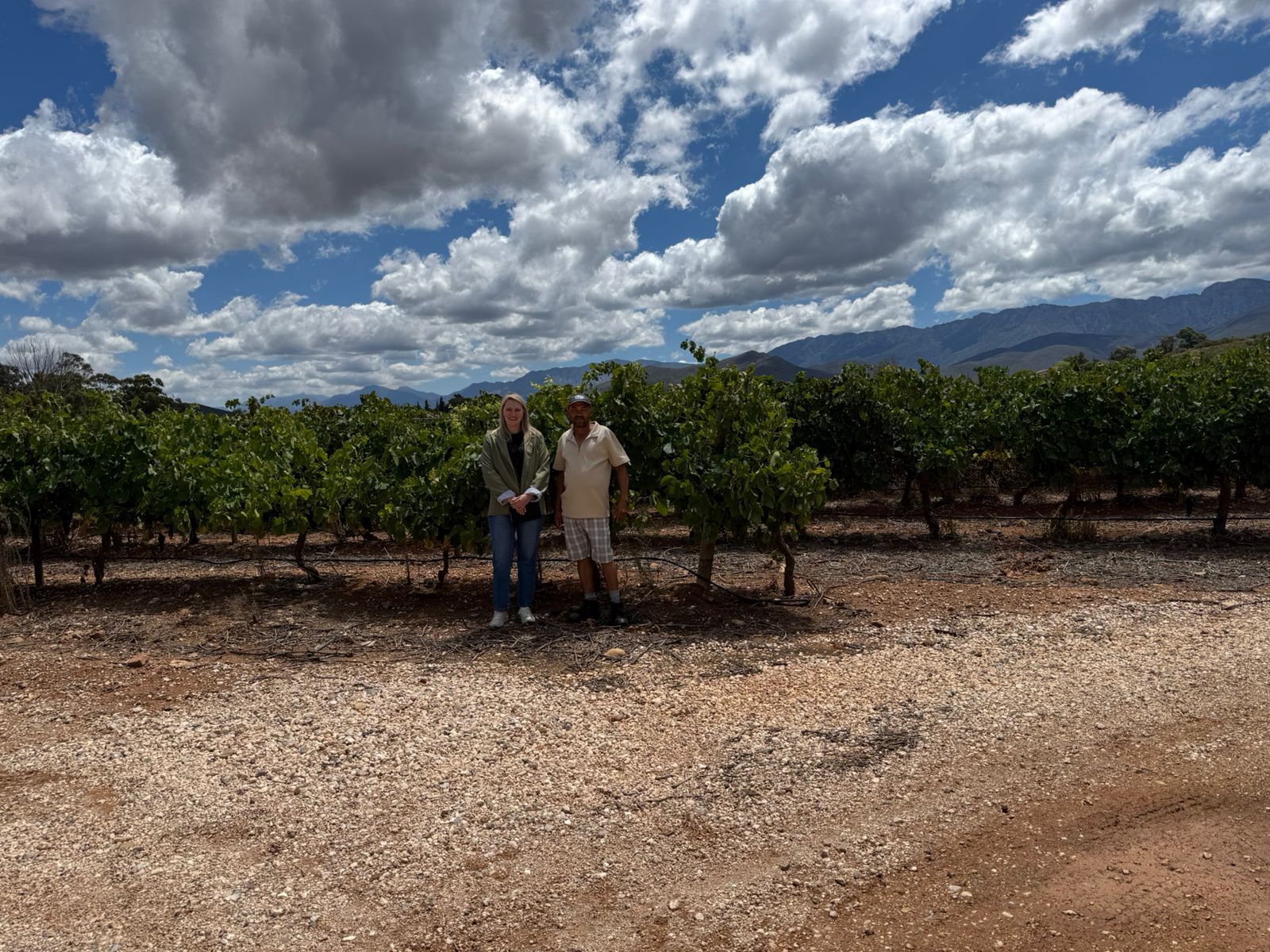
As part of the Black Producer Support Programme, WIETA conducted a site visit to one of its first programme beneficiaries. In line with its commitment to providing continuous support to participatory Black and emerging producers, a series of roadshows and site visits was carried out during the first quarter. These engagements aim to ensure adequate support for sustaining ethical systems and promoting long-term sustainability.
With a strong focus on strengthening relationships, the team was excited to reconnect with inspiring pioneers such as Chrisjan Williams from De Goree Trust. A heartfelt thank you to Chrisjan and Anchané Koekemoer from Van Loveren for sharing this inspiring story of collaboration and their ongoing commitment to alleviating poverty and uplifting communities.
Ebenhauser Smallholders
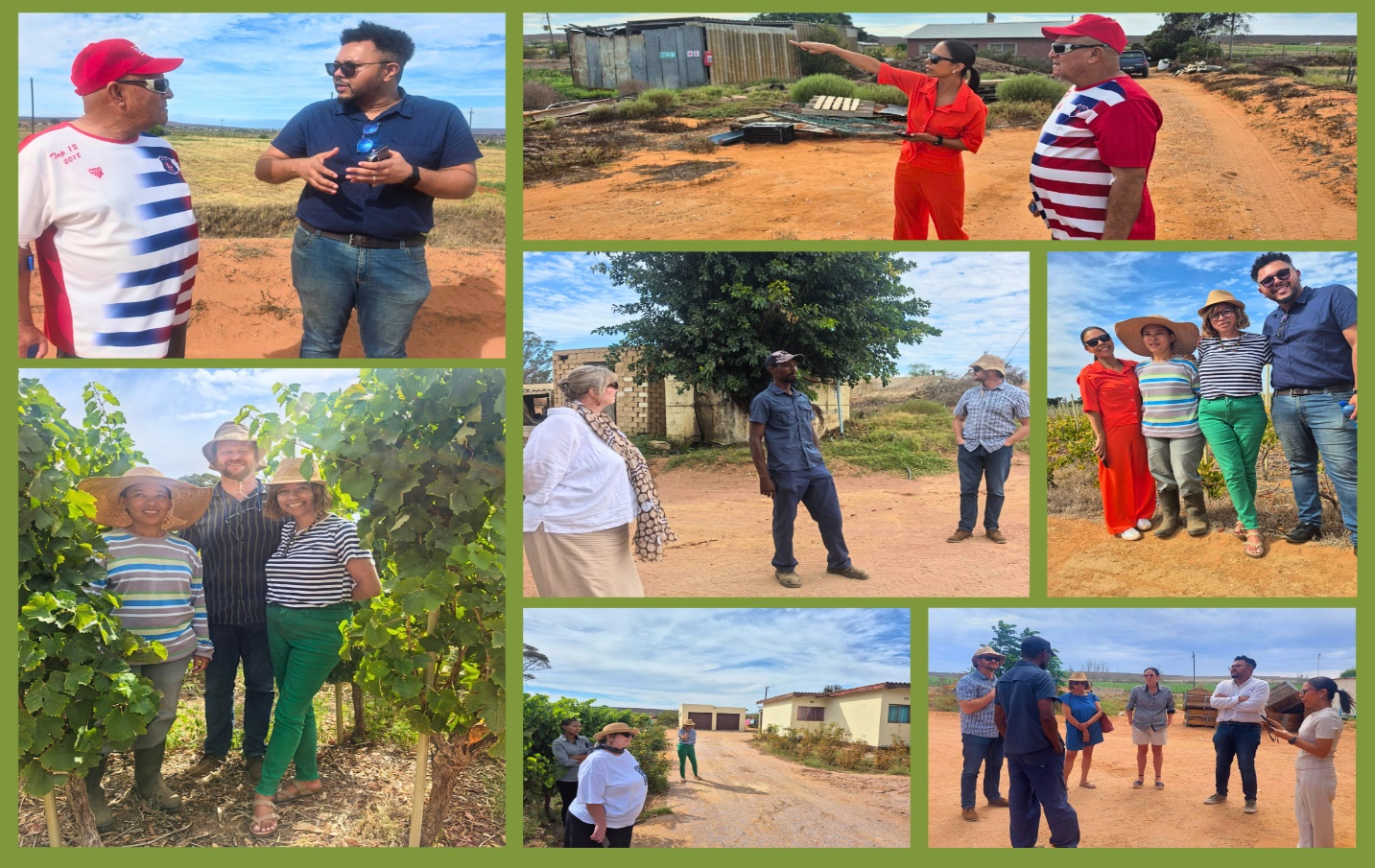
WIETA, in partnership with SA Wine, recently visited smallholders in the Ebenhauser region. We had the privilege of engaging with four inspiring producers who have participated in WIETA’s support programme. Their journeys reflect resilience, innovation, and pioneering leadership within their communities.
While sustainable business practices remained central to our discussions, these visits also reinforced the industry’s commitment to amplifying producers’ voices, strengthening mitigation strategies, and building meaningful, long-term support systems for smallholders. A sincere thank you to Natasha Love, Henry Don, Johan Cloete, and Piet Vuyani for generously sharing their stories and experiences. A further thanks to Lutzville Cellar for hosting our training session and to the SA Wine team for joining us over the two days. Should you have an interest in participating in the Emerging Producer Programme, please contact Liane Langeveld at liane@wieta.org.za.
All About Standards
Guidance for Producers, Farms, and Cellars: Managing Overtime and Worker Well-being
The 2026 harvest has unfolded under notable climate-driven disruptions. Grapes reached maturity sooner than expected, resulting in harvest kicking off as early as late December 2025, roughly two weeks ahead of the norm. A tightly compressed peak window, with large volumes arriving all at once, led to processing slowdowns, longer shifts, and heavier dependence on overtime.
These developments aren’t isolated breakdowns in operations. They reflect a sector-wide adjustment to climate volatility, and industry bodies have formally sought a blanket ministerial exemption to permit retrospective and extended overtime during this unusual period.
Overtime compliance: What auditors will evaluate
Auditors have been guided to apply contextual, risk-aware judgement rather than rigid rules. When overtime goes beyond standard limits, they will consider whether the overtime was genuinely seasonal and exceptional, rather than ongoing; whether exemption requests were submitted or underway with the Department of Employment and Labour; whether fatigue risk was identified and actively addressed; whether rotation practices were used to limit exhaustion; whether workers were paid correctly and consent requirements followed; and whether core conditions such as rest breaks and meal intervals were largely upheld.
If your operation exceeded approved overtime limits due to the early harvest, auditors will look at whether actions were taken in good faith, based on earlier approvals; whether there has been engagement with the Department around exemptions; and whether hours worked and fatigue levels were monitored in real time.
Managing fatigue and exhaustion: practical steps
Audits won’t rely only on paperwork. In smaller cellars and farm wineries, informal systems may still work well, and auditors recognise that.
What auditors will look for: Rotation practices or shift changes, supervisor awareness of fatigue and exhaustion risks, input from workers about how tired they felt, and records of incidents or accidents during harvest.
Practical steps such as: Hydration points, shaded rest spaces, cooling measures and standby arrangements for incoming trucks.
The emphasis is on whether risks were managed effectively, even if documentation was lighter during peak periods.
Preparing for an audit: Documentation and evidence
To strengthen your audit outcome, have the following ready:
- Overtime exemption requests and related correspondence with the Department
- Overtime logs and payroll records
- Shift plans and rotation notes, including informal setups
- Worker consultation records on fatigue and safety
- Minutes from health and safety meetings
- Maintenance records for rest areas, hydration points and similar facilities
- Any internal risk assessments tied to harvest pressures
Tone and framing: How findings will be reported
Findings should recognise the broader context, including climate shifts, early harvest timing and logistical strain. Where corrective steps are needed, they will be proportionate, focused on root causes and aimed at building long-term resilience.
Developmental standards and assurance approach
WIETA’s Standard and Audit Assurance framework acknowledges that sustainability depends on balancing several factors: legal compliance, worker wellbeing, economic sustainability and climate adaptability. Farms and cellars’ handling of overtime should reflect this balance. Even under pressure, responsible management will be viewed positively.
Looking ahead: preparing for future seasons
The industry has committed to tackling these challenges more systematically after the 2026 harvest. You’re encouraged to capture lessons learned from this season, start planning early for climate variability, work with industry bodies such as Vinpro, Agri Western Cape, SA Wine and WIETA on future exemption approaches, and strengthen internal systems for tracking hours, managing fatigue and consulting workers. Should you have any queries regarding overtime exemptions, please contact Chirstone Hornsby at chirstone@wieta.org.za.
Refresh on the Labour Desk
The WIETA Labour Desk serves as a vital resource for workers in the wine industry, offering a safe and confidential platform to report human and labour rights violations. Aligned with the UN Guiding Principles on Business and Human Rights and South Africa’s Protected Disclosures Act, the Labour Desk upholds transparency, accountability, and the protection of workers’ rights across the wine supply chain.
How to Access the Labour Desk
- Report a violation: Complaints can be submitted via email, phone, or through the WIETA website. Reports may be made anonymously, and all information is treated with strict confidentiality.
- Supporting information: Including relevant details helps ensure a prompt and effective investigation.
Human rights due diligence (HRDD)
The Labour Desk operates within WIETA’s broader human rights due diligence framework, ensuring that allegations are investigated swiftly. This proactive approach helps members prevent violations and enables timely remediation when issues arise.
Incidents reporting & investigations protocol
- Preliminary assessment conducted within 10 working days of a report.
- If the complaint is valid, the Labour Desk Coordinator engages with relevant parties.
- Findings are submitted to the WIETA Standards Manager and CEO.
- A plan is developed collaboratively to address the violation and implement corrective actions.
Key functions
- Guidance and support on labour rights and workplace standards
- Confidential reporting under whistleblower protections
- Training and capacity building for workers and employers on labour rights and ethical practices
- Monitoring remediation plans to ensure lasting improvements
The WIETA Labour Desk connects workers, producers, and stakeholders to uphold ethical practices and promote fairness and social responsibility in the wine industry.
Get in touch
Email: labourdesk@wieta.org.za
Tel/WhatsApp: +27 063 766 6548
Website: www.wieta.org.za
Quarter 2 Training Dates – April to June 2026
WIETA continues to support new businesses and their employees responsible for compliance with targeted, practical online training sessions in the 2nd quarter of 2026. These upcoming engagements are designed to strengthen understanding of compliance requirements while offering direct insight from industry experts and regulators.
Introduction to the WIETA Audit Assurance Process
New to ethical compliance or needing a refresher in preparation for an audit in 2026?
Our online training on the Introduction to the WIETA Audit Assurance Process takes place on:
- 9 April 2026
- 11 June 2026
This session will walk participants through the audit assurance process and provide guidance on using the online ethical portal effectively. It will also focus on a brief WIETA Standard V5 (2025) update.
Introduction to the Standard V5 2025
Our more in-depth introduction to the new standard will be held online from 09:00 to 14:00 on:
- 27 May 2026
WIETA Standards Advanced Master Class Series
Our Master Classes provide a further opportunity to do a deep dive into particular legal and compliance aspects of our WIETA Standard. These advanced training sessions invite key speakers and experts with specialised experience in various aspects of the law and best practice to share their insights. The sessions are free for members who are paid up for 2026.
15 April 2026
OHS Master Class: Compliance with Conditions of Building and Equipment
09:00 to 11:00
Speakers: Department of Employment and Labour, Rudelle van der Merwe, and an NSF auditor representative.
5 May 2026
ESTA Masterclass
09:00 to 11:00
Speakers: Andre Bloem, Esmeri Theron, and Nikita Stander.
3 June 2026
Basic Conditions of Employment and Sectoral Determination 13
Speakers: Led by CCMA Commissioner Wilbur van Niekerk, this session will focus on key provisions, common areas of non-compliance, and how to apply the legislation in day-to-day operations.